Why Did Jesus Come? Christmas as a Story of New Creation
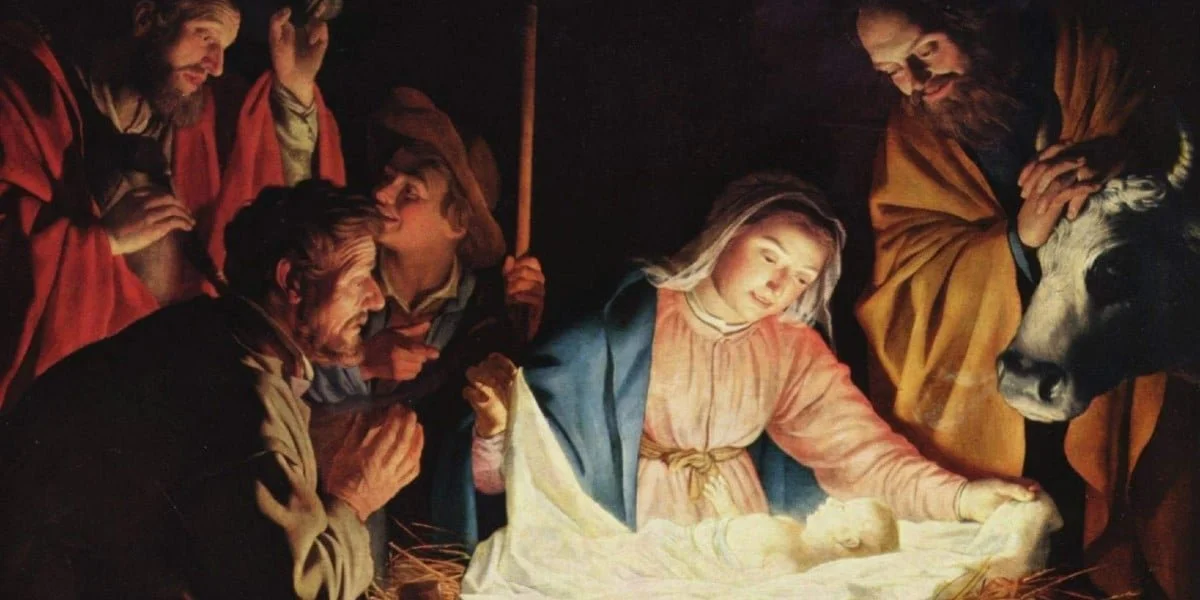
During the Christmas season, we are surrounded by images of Jesus’ birth. Nativity scenes. Angels. Shepherds. A baby in a manger. It all feels familiar, almost comforting. But there is a question just beneath the surface that we rarely slow down long enough to ask.
Why did Jesus come at all?
Not simply why he was born, or why Christmas matters emotionally, but what was actually happening when Jesus entered the world? What if the birth stories are doing more than pointing us to a moment in history? What if they are making a claim about the world itself?
Here is the idea that grabbed me and would not let go. What if the coming of Jesus is presented in the Gospels as a recreation story? Not primarily a story about individual salvation, but about God stepping back into a world that has fallen into chaos in order to make it right again.
That might sound strange at first. It did to me too. But once you begin to trace the story, the connections start stacking up in ways that are hard to ignore.
To see it, we have to start where the Bible itself starts.
Genesis opens with a simple declaration. “In the beginning, God created the heavens and the earth” (Genesis 1:1). That line functions like a title screen. God made everything. Full stop. The story really begins in the next verse. We are told that the earth was formless and empty (Genesis 1:2). The Hebrew phrase is תֹהוּ (tohu) and בֹּהוּ (bohu). When used in proximity, describe a situation resulting from judgment. Things are wild and waste. Not nothing, but disordered. Chaotic. Darkness covered the surface of the watery deep, and the Spirit of God was hovering over the waters (Genesis 1:2).
In the ancient world, water was not a neutral image. It represented chaos and threat. The Hebrew word translated “deep” is תְּהוֹם tehom (Genesis 1:2), which closely resembles the Akkadian word Tiamat, the chaos sea creature found in surrounding ancient stories. In those myths, creation happens when the creator god defeats the chaos monster. U. Cassuto (1883–1951), a rabbi and biblical scholar, describes it this way in his Commentary on the Book of Genesis, Part 1. He notes that in the Bible the word appears several times as a synonym for the sea. However, in ancient Israelite poetry, which the prophets and biblical poets occasionally allude to, the Deep is portrayed as a creature with its own will. It is depicted as rebelling against God and ultimately being subdued by divine power. See Isaiah 51:9–10.
Genesis tells the story differently. God does not struggle. He simply enters the chaos. His Spirit hovers over it, and then God begins to speak order into existence. Light. Space. Land. Life (Genesis 1:3–31). The creation story is not about scientific material origins. It is about God bringing order out of chaos.
That theme does not stay in Genesis.
As the biblical story unfolds, humanity participates in disorder. Violence, injustice, oppression, exile. Again and again the world slips back toward chaos. And then, in the opening chapters of the Gospels, something remarkable happens.
Jesus is born, and Matthew tells us he will be called Emmanuel, which means God with us (Matthew 1:23). That phrase is not just sentimental. It is theological. God has re entered the story.
Then Jesus is baptized. He goes down into the water, and as he comes up, the heavens open and the Spirit descends on him like a dove (Matthew 3:16; Luke 3:21–22). In the Greek text, the word for Spirit is pneuma. It is the same word used in the Greek translation of Genesis when the Spirit of God hovers over the waters (Genesis 1:2 LXX). Spirit. Water. God present in the midst of chaos.
Immediately after this, Jesus is driven by the Spirit into the wilderness (Luke 4:1). The wild and waste place. The uninhabited space. The chaos space. And there he confronts the tempter (Luke 4:2–13). The accuser. The one who feeds disorder by offering power without trust, kingdoms without obedience, and control without faithfulness. Where humanity failed, Jesus holds the line. Order begins to push back chaos.
Luke tells us that after this confrontation, Jesus returns in the power of the Spirit and begins his ministry (Luke 4:14). And what does that ministry look like. He heals the sick (Luke 4:38–40). He restores broken relationships (Luke 19:1–10). He confronts oppressive systems (Luke 11:42–46). He forgives sins (Luke 7:48–50). He feeds the hungry (Luke 9:10–17). He welcomes the outcast (Luke 5:12–16). Everywhere Jesus goes, things move toward wholeness.
This is not random kindness. This is creation work. This is Genesis work. God once again bringing order out of chaos.
The Gospels are not simply reporting events like a modern biography. They are theological narratives. They are telling true stories about Jesus in a way that helps us see what God is doing in the world. And what they seem to be saying is that Jesus is reenacting the creation story. God entering chaos, confronting what distorts and destroys, and restoring what was meant to be good.
This thread carries all the way to the end of Jesus’ earthly story. After the resurrection, Jesus sends his followers out. “Go, and make disciples of all nations” (Matthew 28:19). Teach them to live this way (Matthew 28:20). And then he says something that echoes both Genesis and the birth story itself. “I am with you always, to the end of the age” (Matthew 28:20).
God with us. Again.
In Genesis, humanity is invited to participate in God’s ordering of the world. “Be fruitful and multiply. Fill the earth and subdue it” (Genesis 1:28). In Jesus, that invitation is renewed. The recreation story does not end with him. It expands through those who follow him.
This reframes Christmas.
Jesus did not come simply to rescue individuals from a broken world. He came to confront the brokenness itself. To deal with both the spiritual forces and the human systems that drag creation back into chaos. And then he invites us to join him in that same work.
That raises a hard but necessary question. If Jesus came to recreate the world, what does it look like for us to participate in that story? Where are we bringing order out of disorder? Where are we confronting injustice instead of benefiting from it? Where are we choosing trust over control, faithfulness over fear, love over power?
This is not about religion. Many people have been hurt by religion. This is about Jesus. And we should not judge Jesus by the abuse done in his name, but by what he said and what he did.
Christmas is not just about a baby in a manger. It is the announcement that God has stepped back into the chaos of the world and begun again (John 1:14). And the invitation still stands.
Will you join him in the work of new creation?
That may be the most important Christmas question of all.