Why Did Jesus Really Come?
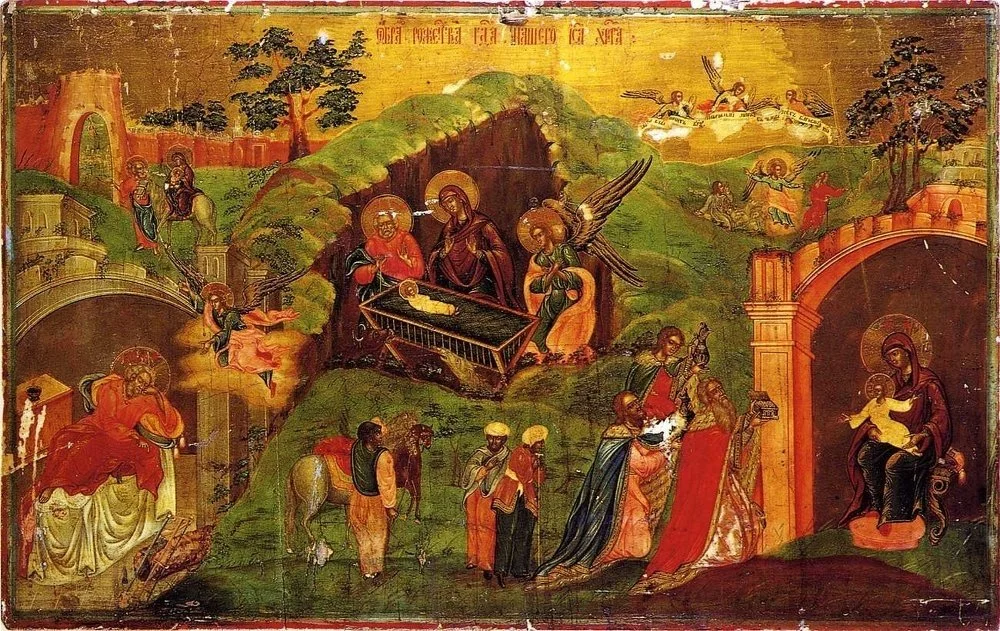
Every year the holiday season invites us back into the familiar world of nativities, Christmas songs, and the image of a baby lying in a manger. It is a beautiful scene. It is also one that can become so familiar that we rarely stop to ask a deeper question. Why did Jesus come at all? What was he entering into? What was he hoping to accomplish? If we pause long enough to ask those questions, they open a much larger conversation than many of us grew up with. A conversation that stretches from Genesis to Revelation and challenges the idea that Jesus came only to secure personal salvation. The story is bigger. It always has been.
When you begin with Matthew and Luke you get the birth narratives that shape much of what we picture each December. Angels, shepherds, Joseph and Mary, and a newborn. But if you are looking for a clear explanation of why Jesus came, you do not exactly find it spelled out in those early chapters. You get hints. You get glimpses. You get echoes of something ancient and promised. Something the biblical story has been building toward from the moment Genesis three ends in disappointment and hope.
This is where we need to say something that can feel unsettling at first. The idea that Jesus came to earth mainly to die so you can go to heaven when you die is not the way the Bible frames his mission. His death matters. Dealing with sin matters. But the Bible is not telling a story about God rescuing individual souls from earth so they can escape to a better place. The Bible is telling a story about God rescuing creation itself. From Genesis one and two to Revelation twenty one, the vision is not an abandoned world but a renewed one. Not escape but restoration. Not God leaving but God returning.
So when you reduce Jesus to someone who came only to fix your afterlife, you shrink the story to something the biblical writers never intended. The New Testament spends most of its time not on Jesus’ birth and not even on his death but on his life. On what he said. On what he did. On how he lived among people. If the only point was the cross, you would not need all that material. Yet the gospels are full of detail about how Jesus moved through the world and how he showed the nature of God’s kingdom by healing, welcoming, lifting up, restoring, feeding, teaching, and confronting the forces that dehumanize.
If you know my work, you know how much NT Wright has shaped my thinking here. His book “Surprised by Hope” helped me see that the Christian story is not about abandoning earth for heaven. It is about heaven and earth being brought together in a way that restores God’s original intent. That is the wider lens we have to keep in view when we ask why Jesus came.
If you follow the story from the beginning, the pattern becomes clear. God creates humans to bear his image and participate in his work. Identity and vocation. They are meant to rule rightly, cultivate creation, and partner with the one who made them. That calling goes wrong almost immediately as humans choose independence over trust. From there the Bible becomes the story of God working through people who continually fail the test. Abraham. Isaac. Jacob. Moses. The judges. The kings. Even the best of them collapse under the weight of their own brokenness. And each time you are left wondering. Who will fix this? Who will finally do what humans were always meant to do? Who will trust God fully?
So when Jesus appears, the question in the storyline is simple. Is he the one? And Matthew sets up the answer by placing Jesus in the wilderness after his baptism. Israel failed in the wilderness. Adam failed in the garden. Every major figure before Jesus, at some point, faced some form of temptation or testing and fell short. But Jesus does not. He resists the offer to seize authority on his own terms. He refuses shortcuts. He rejects the path of self reliance. He steps out of the wilderness as the first human in the biblical story to succeed where everyone else failed. And that is the moment when something new begins.
From there the first words out of his mouth are not about heaven as a place you go after death but about God’s reign arriving here. “Repent, for the kingdom of heaven has come near.” Mark and Luke say kingdom of God. Matthew says kingdom of heaven. They mean the same thing. Matthew is writing to a Jewish audience that often used the word heaven as a reverent way of referring to God. But Jesus is not talking about a distant spiritual realm. He is talking about God’s rule and authority coming to earth.
This is why it helps to reframe how we think about the word heaven. Think of it as the place where God makes decisions about how creation should work. Think of it as the office from which the world is governed. When Jesus ascends to sit at the right hand of the Father, it is not describing a location far away. It is describing his authority. As if God is saying, this is the one who now runs the company. All authority in heaven and on earth has been given to him.
So when Jesus says the kingdom is near, he is saying that God’s way of running the world is breaking in. That the long awaited moment has arrived. That the CEO has taken his seat and things are about to change. And what does it look like when God is in charge? Look at Jesus. No more sickness. No more exclusion. No more shame. No more hunger. No more dehumanizing darkness. People are healed. People are restored. People are fed. People are welcomed. People are forgiven. People are called into a new way of being human.
This is why Jesus came. To show us what God always intended for the world. To embody the life humans were always meant to live. To take the vocation of image bearing and do it faithfully so that we could join him in bringing God’s good into the world.
This is also why repentance matters. We have turned that word into a threat. Stop being bad or else. But Jesus uses it as an invitation. Turn from the path that drains your life and step into the path that leads to wholeness. Turn from the isolation of self reliance and return to the God who offers life and life abundant. Repentance is not shame. It is an invitation to come home.
As we move through the Christmas season, many of us will pass nativity scenes and hear familiar carols about the baby in the manger. But the deeper invitation of the story is not only to remember that Jesus came. It is to consider why he came and what it means for us now. If Jesus came to reveal God’s kingdom on earth, then the question becomes simple. What does it look like for me to live in alignment with that kingdom this week? What does it look like for me to participate in God’s good? How might I join God in the places where his healing and hope are already at work?
One prayer I find myself returning to almost daily is this. God, help me see what you are doing today. And give me the courage to join you in it. It is a simple prayer, but it keeps the heart pointed toward the kingdom Jesus announced. A kingdom that is still coming. A kingdom that is already near.
May this season invite you into that story. May it help you see not only who Jesus is but what his coming means for the world you inhabit each day. And may you find yourself drawn into the life he offers. A life shaped by hope, goodness, and the presence of God who has never abandoned his creation and never will.