What If the Bible Was Never Meant to Give You Answers
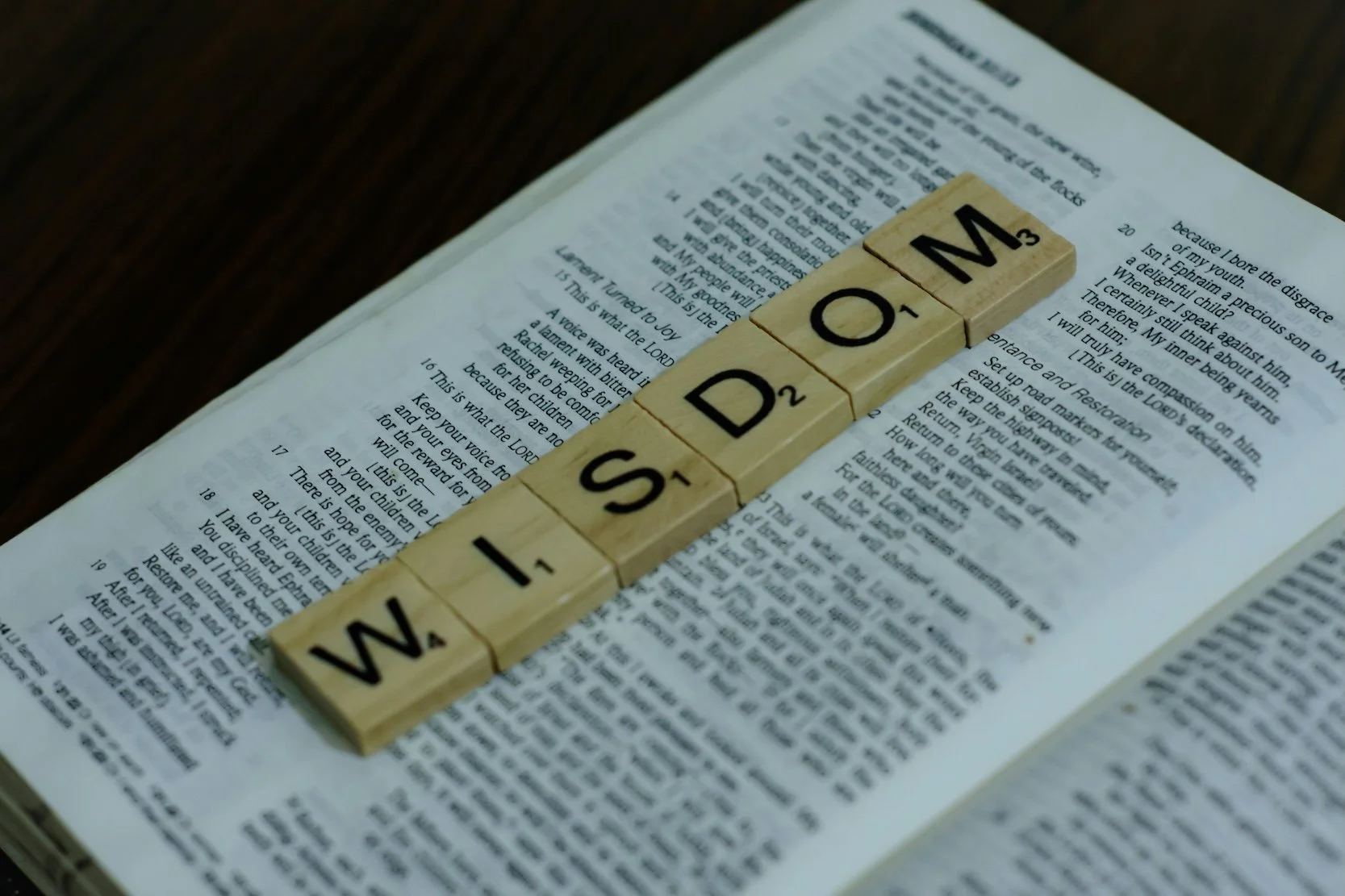
The question I want to wrestle with is simple, but unsettling. What if the Bible was never meant to give you answers?
Before you close this and move on, let’s slow down and unpack where this idea comes from. Many of us were taught, often very early on, that the Bible functions as a kind of proof text. A book that provides clear, direct answers to whatever question or situation we are facing. That was certainly my experience.
I came to faith at fifteen years old in a very conservative environment. From the beginning, the Bible was presented as something absolute and clear, a document that could tell you exactly what to believe and how to respond in any situation. One of the first gifts I was ever given was a prayer book designed for teenagers. It worked like this. If you were feeling anxious, here were the verses. If you were struggling with sin, here were the verses. If you were sad, angry, or confused, here were the verses and even a prayer you could pray alongside them.
And honestly, at that stage of my life, it was helpful. It served me well. It was milk. It helped me survive and orient myself as someone new to faith. But it was never meant to be the end of the journey.
If where you are in your faith has not changed, grown, or matured over the years, the question worth asking is not whether you believe enough, but what you are doing with your faith at all. For many people, this stagnation is not their fault. They were told what to believe, what to think, and warned not to question it. But questions matter. Why, where, when, how. These are not threats to faith. They are invitations into maturity.
The writer of Hebrews speaks directly to this. In Hebrews chapter five, the author says that there is much to explain, but it has become difficult because the audience has grown sluggish in hearing. Though they should be teachers by now, they need to return to the basics. They have gone back to milk instead of solid food. Milk is for infants. Solid food is for the mature, for those whose perceptions have been trained by practice to discern good and evil.
That line matters. Trained by practice. There is participation here. Ownership. Faith is not meant to be outsourced to leaders, institutions, or systems. Discernment is not something done for you. It is something you grow into.
For far too long, I stayed in an immature state. I let church leaders and structures discern for me. I lived off what others fed me instead of learning how to feed myself. I confused certainty with maturity. But certainty is easy. Wisdom is not.
Church systems often prefer answers. Institutions survive on clarity and consistency. Many denominations require agreement with a fixed set of beliefs in order to belong or lead. I lived within that world for years. Eventually, I reached a point where I could no longer sign my name to beliefs I no longer held. That moment did not represent rebellion. It represented growth.
The more questions you ask, the more you are often seen as a threat to organizational stability. Many people know exactly what that feels like. Questioning quietly leads to distancing. Distancing eventually leads to leaving.
But there is another way forward. A way rooted in growth and maturity. A way where you learn to practice discernment for yourself. Where faith is not about getting the right answers, but about becoming the kind of person capable of wisdom.
This is where understanding the Bible as wisdom literature matters.
Take the book of Job. Job is not primarily a historical account. It belongs to the wisdom tradition alongside Proverbs and Ecclesiastes. When we treat it as history, we miss the point entirely. Job is asking a question, not answering one. What do we do when life falls apart? How do we understand God when suffering comes without explanation?
Job’s friends offer answers. They assume suffering must be punishment. Job refuses that logic. God eventually shows up, not with answers, but with questions. Can you command the morning? Can you tame the wild things of creation? The book ends without resolving the why. The point is not resolution. The point is transformation.
Ecclesiastes takes this even further. If Proverbs feels clean and orderly, Ecclesiastes feels raw and honest. It questions every neat cause and effect assumption we love. It tells us that life is unpredictable. That wisdom does not guarantee outcomes. That control is an illusion. Its invitation is not certainty, but presence. Enjoy life. Be faithful today. Tomorrow is not promised.
The Bible itself does not treat itself like an answer book.
Even Jesus rarely gave direct answers. He taught in parables. Stories designed to provoke thought, not shut it down. Parables force participation. They require wrestling. They linger. They spark conversation on the walk home. What do you think he meant? What do you see in that story?
The very name Israel means one who wrestles with God. Wrestling is not a failure of faith. It is central to it.
The Psalms reflect this beautifully. They are full of doubt, anger, hope, trust, despair, and praise. They do not sanitize faith. They invite honesty. They give language to real human experience. They do not offer answers so much as companionship in the struggle.
When you approach the Bible looking only for answers, you risk missing the wisdom it is offering. Wisdom is not about certainty. Wisdom is about discernment. About becoming someone who can navigate complexity with humility and faithfulness.
The Bible is not trying to make you right. It is trying to make you wise.
So read it slowly. Wrestle with it. Ask better questions. Let it shape you rather than arm you. And trust that faith is not something you outgrow by questioning, but something that deepens when you do.
That, I believe, is what the Bible has been inviting us into all along.