The Glorious Unraveling
Curiosity can get you into trouble.
At least that's how it feels in certain faith spaces. Too many, I would argue.
One dictionary defines curiosity as "inquisitive interest in others' concerns." I find that definition intriguing. A synonym listed is "nosiness." But I actually think it might be the perfect word when it comes to thinking about faith.
I think we should always be curious about the "other side" and why people believe what they believe. Because when we live life alongside other people, curiosity should naturally lead to questions. How is your neighbor or coworker experiencing life? Why do they see the world the way they do?
But what happens when it challenges our beliefs, what we've always known to be true? What would happen if we start to ask ourselves questions?
Those questions can sound like this:
"If God is so good, why does he allow bad things to happen to good people?"
"My friend is gay and loves Jesus. Will the church accept her? Does God accept her?"
The list could go on.
Asking questions can start an unraveling. Sometimes before we're ready for it.
We're now living in a tension between curiosity and certainty.
And that's dangerous because a single question can tug on a thread of someone's faith, a faith often defined by what the pastor preaches on Sunday mornings or what our parents taught us growing up. And once that thread is tugged, the whole thing can come apart.
Suddenly you're the disruptor. Some might even call it deconstructing. (Gasp.)
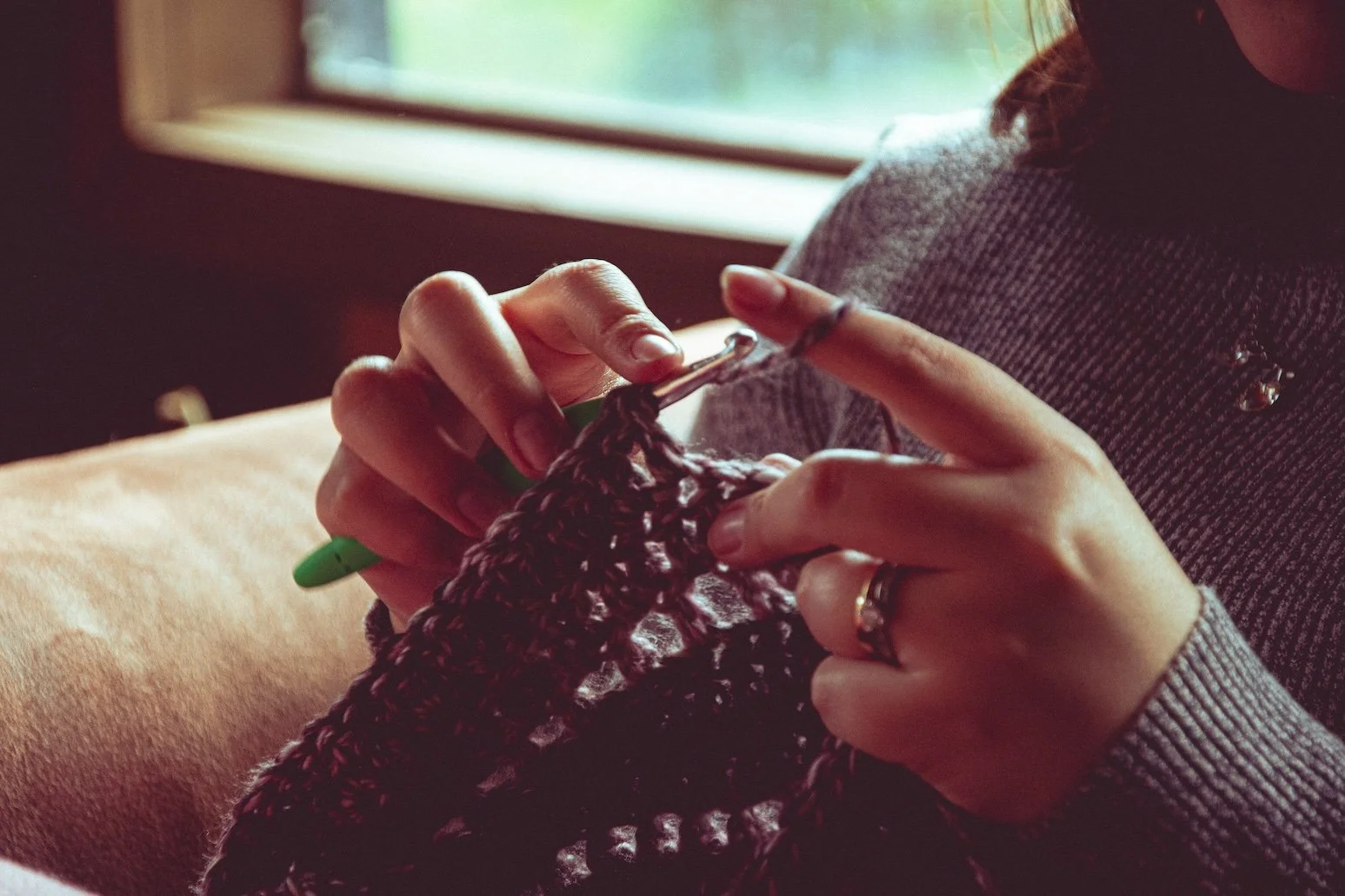
The idea of unraveling reminds me of my beautiful grandmother. She passed away recently. She was 93 years old and a fiery woman. Strong and feisty, but also one of the most loving people you could ever meet. She had many talents, but one of the skills she truly mastered was crocheting. She even gave lessons.
It was maddening to take lessons from her.
You'd finally get the basic stitches down. You'd learn how to hold the yarn. You'd complete a row or two and feel pretty proud of yourself. Then she'd say, "Nope. Take it out and do it again." Usually it was because the stitches weren't consistent. Or the rows were uneven because one had an extra stitch. Or maybe it was a genius move from a wise teacher.
Needless to say, I didn't like that.
I wanted the pat on the back. I wanted to be told what a crocheting prodigy I was.
After her funeral, I saw a post that said, "I hold on to the hope that all this falling apart will soon become falling into place." It struck me. I could see my grandma's workmanship and how, to get the final product right, it wasn't just a suggestion to take out the bad stitches and do them over; it was imperative.
Unraveling is a part of the process.
Yes, it's frustrating. Yes, it means redoing work you thought you had done well. But if you keep going down the same path with uneven stitches, eventually you won't even recognize the final product.
You see, if you hold your yarn too loosely, the piece won't hold its shape. It ends up sagging under pressure, revealing gaps and holes where there should be structure. The piece ends up bigger than intended, and it no longer holds its original form.
However, if you hold your yarn too tightly, the result is rigid and scratchy, something you probably wouldn't want to cuddle up with. It ends up being smaller than your desired result, and stitches can be harder, almost impossible to undo when necessary. Not to mention, your hands and wrists cramp, muscles fatigue from the effort, resulting in you giving up on the whole thing entirely.
This is not unlike faith.
Some of us are wound too tight, refusing to give on anything. We become rigid, bristly, and difficult to approach. We don't let anyone see through the proverbial holes we all have. Our faith is small, our mind is set, and ultimately it wears us out from having all the answers but not engaging with difficult questions because those stitches are way too tight to undo now.
Others of us hold things so loosely that our belief lacks shape or structure altogether. We end up thinking anything goes. The holes too big that nothing would fit inside of it. We don't even resemble what we were created to be because nothing has form or purpose.
Too loose, and it can't bear any pressure.
Too rigid, and it can't stretch or grow.
But somewhere in the tension, somewhere between certainty and curiosity, something strong is formed.
Maybe sometimes the healthiest thing we can do is pull back a few rows.
Redo the stitches.
Continue seeking what it looks like to represent who we are created to be, Whose Image we are supposed to bear.
Seek to understand others and how God might be moving in their lives.
Maybe that's how we become people of empathy, safety, and love, the kind of people Jesus modeled for us.
Maybe the unraveling isn't failure.
Maybe it's part of the process.
Ask the questions.
Follow the curiosity.
Just don't do it alone.
We're here to walk with you.