If you were to die today, would you go to heaven or hell?
That was the first question I was asked when being invited into my faith journey. A bit heavy handed, yes. But effective nonetheless. It brought fear of the unknown and invoked a call to security. Security in my salvation, in my place after I die.
The annoying thing though is that the assurance I had didn’t last long. As soon as those pesky questions started to arise, I had to shove them down. Asking questions meant I didn’t have faith; faith in what the pastor was teaching, faith in what the bible was “clearly” saying. It took the bravery of my husband asking questions of his own where I realized my questions weren’t bad.
I have always been a skeptic. I’m realizing and embracing that as I’ve gotten older. I have too many curiosities, things that feel unexplained or about things that seem to be doing harm.
In my first post, I spoke of a deep question I had as a kid. It inquired why my dear friend and her Christian family didn’t have a place in heaven, according to my church at the time. Her dad was a pastor. They clearly loved Jesus. What was the separating line? I never did get an answer. At least not one I accepted.
Unfortunately, asking questions in church is more often than not discouraged. And not just church. Sometimes amongst family or even friends.
Why? Why do we fear the questions? Why does it appear that having questions means your faith is wavering? Or that you don’t trust God enough? And going a level deeper, why do we feel threatened when others ask questions?
I believe Jesus himself modeled asking, and welcoming, questions.
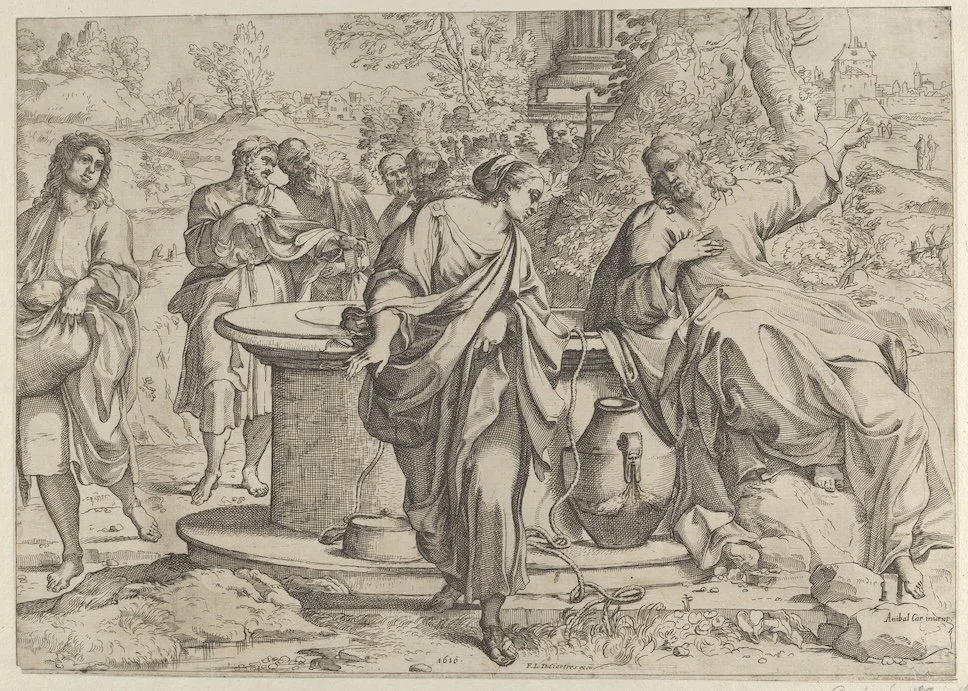
One of my favorite stories in the Bible is found in John, chapter 4. Let me tell it in my own words:
Jesus and his disciples are traveling from Judea to Galilee. They have to pass through a region called Samaria. Now, for those who don’t know, Samaria was seen as the enemy to Jews. There are deep rooted, historical reasons (that I will not go into at this time) and the disciples did not want to go there. So Jesus sent them into town to buy supplies.
Alone, Jesus then sat down next to a well. A woman came to draw water from the well and he asks her for some water (all of this was frowned upon culturally I might add).
What happens next astounds me.
They have a debate.
First, she was taken aback by the fact that he, as a Jew, would even ask her for a drink. Jews and Samaritans didn’t ever use anything in common. They stayed segregated. Then they go into a conversation. At first glance it appears that Jesus is being harsh with her.
But slowing down and reading it, I see something different.
He says what he is offering is living water. She then starts asking critical questions. Of Jesus. “Where will you get this ‘living water’? You don’t think you’re better than our ancestor Jacob do you?” (They were at Jacob’s well) He responds with questions of his own. Asking her about her story, what brought her to this point. He knows things about her that she likely carries shame for, has become a social pariah for.
She acknowledges he is likely a prophet. Then she pushes back on him saying, “You people say we must worship in Jerusalem” (emphasis added). Essentially saying that what he’s offering isn’t available to her and her people because the Jews have always claimed that you can’t worship anywhere but Jerusalem.
He then explains that the time has come where that is changing. He is repairing the rift between Samaritans and Jews. She is the one he is calling to announce that they no longer are “other”. They are all able to worship where they’re at. She then becomes the first preacher, announcing the good news to the Samaritans.
There is so much more to this story but my point is that Jesus didn’t seem annoyed or offended, or threatened, by her questions. He didn’t accuse her of not having faith or not having enough trust. On the contrary, it seems that it was because she asked the questions that he called her to tell the good news. She could have just given him a drink of water and kept her mouth shut. That’s probably what most women at that time would have done. But she leaned in, got bold, and asked the questions.
If this was the only example in the text, I’d say it was a fluke. But Jesus himself answered most questions with more questions. As if to get people to think and wrestle and ask more. He spoke in allegory and riddles. The Gospels of Jesus talk about how over and over he left his disciples confused, until things became clear after his death and resurrection.
So I go back to my questions from earlier. Why do we fear questions? Why do so many questions go unasked?
I am glad I asked the question as a kid, “why is my friend not going to be in heaven with us?” I’m thankful for the questions I have asked God since. And true to His nature, the answers sometimes leave me with more inquiries, but also a wonder for what’s next.
I want to challenge us all to be better at this. Step out and ask the questions. It might open the door for others to do the same. And equally as important, be willing to be asked the questions. It takes boldness and humility. But have the dialogue. Listen with empathy. Challenge. Be challenged.
It might bring change: change like the Samaritans being brought back into community with God. Change like women being empowered to use their voices. Change like those who are “other” are no longer seen that way.
But isn’t that marvelous?