Mark 9: The Hell Passage Is Really About Abusing Power
If a Bible app sent you Mark 9:43 as your verse of the day, what would you do with it?
"If your hand causes you to sin, cut it off. It is better for you to enter into life crippled than to have two hands and go into hell, into the unquenchable fire."
Most of us were taught to hear that as a threat about the afterlife. It has kept a lot of people awake at night, wondering whether one wrong move puts them on the wrong side of God. I want to slow down and read it the way Mark arranged it, because the context changes what the passage is doing.
Start earlier than verse 43
Mark wasn't recording video footage. He arranged the stories of Jesus to make a point, so the order matters.
The section starts in verse 33. The disciples have been arguing on the road about which of them is the greatest. Jesus asks what they were discussing, and they go quiet. He tells them that anyone who wants to be first must be last and servant of all, then puts a child in front of them and says that welcoming a child means welcoming him.
The next scene is the disciples trying to stop someone from casting out demons in Jesus's name because "he wasn't following us." Jesus says not to stop him.
Look at what those two stories share. One is about who gets to have power. The other is about who gets to be in and who gets shut out. That is the frame the hell passage sits inside.
Four sayings, two missing verses
Scholars notice that verses 42, 43, 45, and 47 are four similar sayings placed back to back. Verse 42 warns against causing one of the "little ones" to stumble. The next three are about hands, feet, and eyes.
If your Bible skips from verse 43 to 45 and then from 45 to 47, that isn't a printing error. The earliest manuscripts of Mark don't include verses 44 and 46. Those verses repeat the refrain about the worm and the fire, and translators leave them out or footnote them. The refrain survives in verse 48. The likely story is that later scribes copied it back onto the earlier sayings.
The word Jesus used
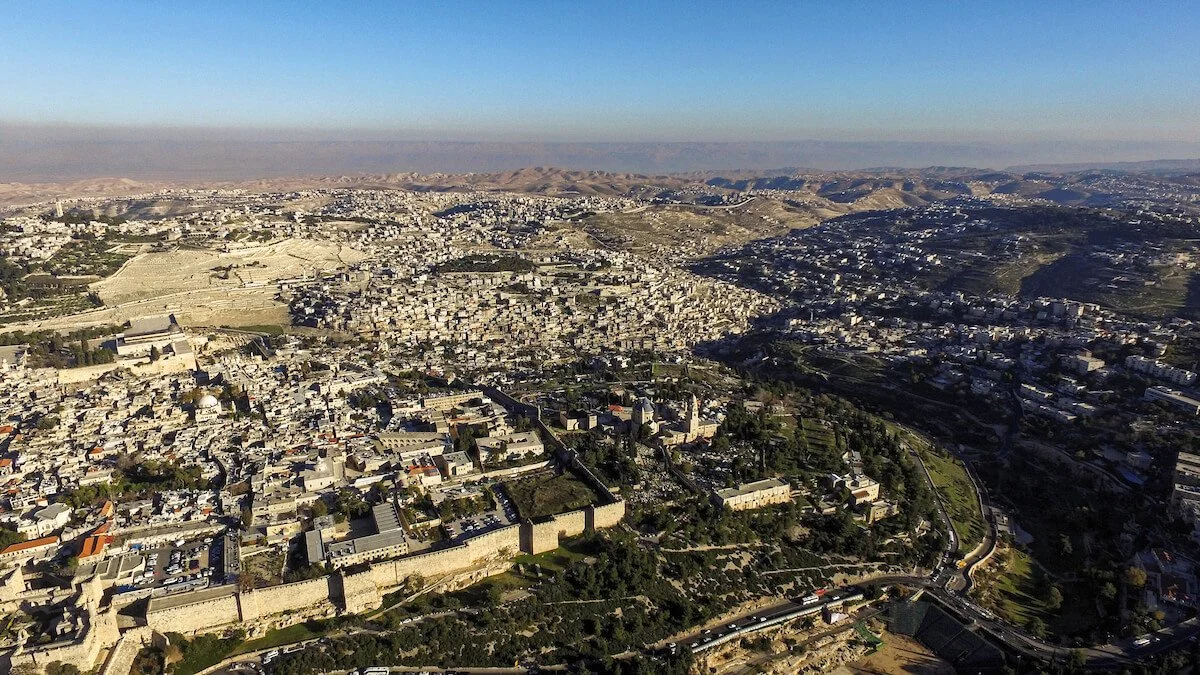
In verses 43, 45, and 47, many English Bibles say "hell." The Greek word is Gehenna. It's the Greek form of a real place, the Valley of Hinnom, just outside Jerusalem's walls.
The Old Testament remembers that valley for one thing. Ahaz burned his sons there as offerings (2 Chronicles 28:3). Manasseh did the same (2 Chronicles 33:6). Jeremiah says the valley will be renamed the Valley of Slaughter (Jeremiah 19). To a first century Jewish audience, Gehenna wasn't an abstract afterlife realm. It was the place where people with power used it to destroy the vulnerable.
You may have heard that Gehenna was the city's burning trash dump. I've said that myself. The evidence is thin, and the idea seems to first appear in the medieval period, long after Jesus. The history of the valley is strong enough without it.
Where the worm comes from
Jesus ends by quoting Isaiah 66:24, and the passage in verse 48 is nearly word for word. It's the last verse of Isaiah, written around the time the exiles were back in Jerusalem and arguing over who was faithful and who wasn't.
Here's the verse:
"Then they will go out and see the corpses of those who rebelled against me. For the maggots that eat them will not die; the fire that consumes them will not die out."
It describes people looking at dead bodies. It's an image of disgust, the kind you'd feel seeing a body that's been burned or eaten away. To me, that fits the argument of the whole section. When you gather power at other people's expense, you become something other than what God intended a person to be, and the image is meant to repulse you.
Salt and peace
Verses 49 and 50 close with "everyone will be salted with fire" and then "have salt in yourselves and be at peace with each other." The salt phrase is one of the hardest lines in Mark, and interpreters disagree about it. One reading is that salt stands for the value you bring to the people around you, and that the closing call to peace is the opposite of taking from others.
So what
I don't read this passage as a threat aimed at people who doubt or slip up. I read it as a warning aimed at those who collect and wield power over the vulnerable, which is exactly what the two stories before it and the little ones in verse 42 set up.
Church tradition places Mark's Gospel in Rome, connected to Peter. That's not certain, but if it's right, this was written into a world where everyone understood imperial power. Any system that consolidates power at the expense of others has to reckon with Mark 9, and not because of a fear of dying. The passage isn't about that.
Does that settle what hell is? No. You can still have that conversation, but I don't think Mark 9 can carry the weight we've put on it. Read it slowly, ask what it meant to the people who first heard it, and see what happens to the fear.