Acts 15: What Christian Unity Actually Meant to the Early Church
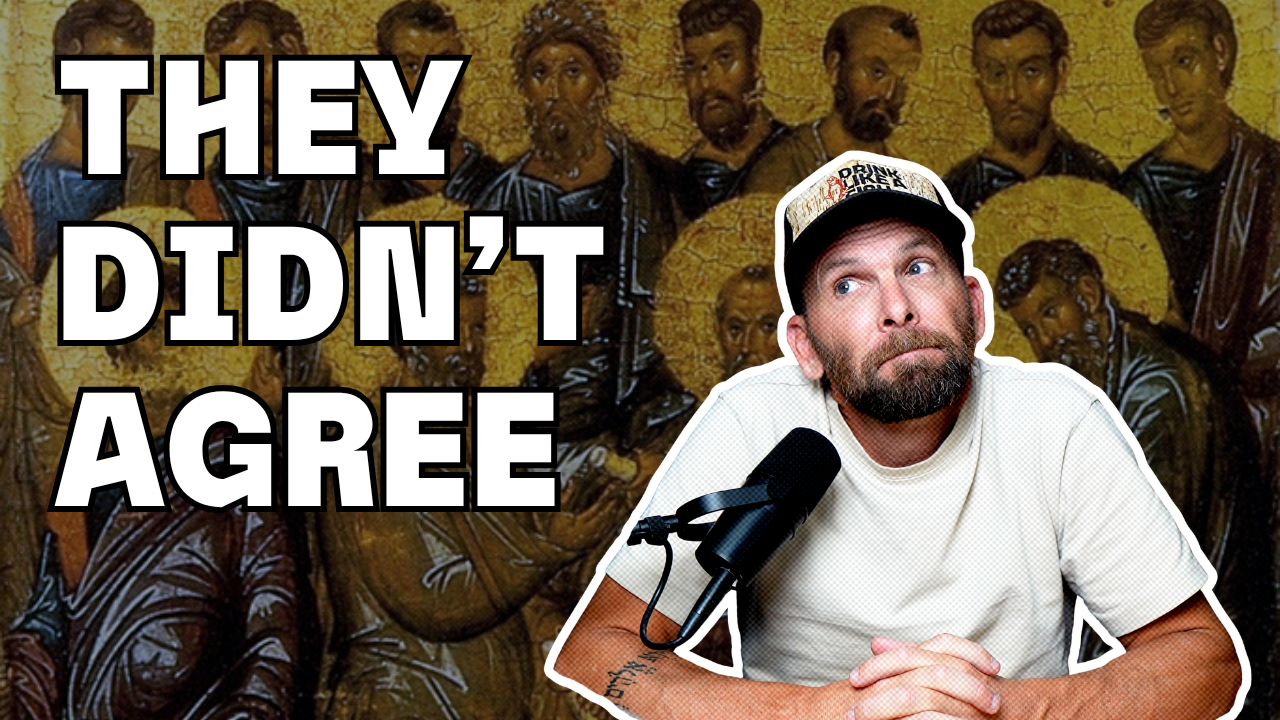
If you grew up in church, you've probably heard some version of this: unity is the highest value, and unity means we don't fight, we don't disagree, we don't let different points of view sit at the same table for too long. Somewhere along the way, unity got redefined as sameness.
Here's the problem. That's not what we find when we actually look at the early church.
In Acts 15, we get one of the most significant moments in the whole New Testament, a moment so consequential it changed the trajectory of Christianity permanently, and most of us blow right past it because we're only interested in the outcome. We skip the mess. But the mess is where the meaning is.
The Setup: A Jewish Movement Meets the Whole World
Paul and Barnabas had just come back from a wildly successful trip planting churches in Antioch and the surrounding regions. Non-Jewish people, Gentiles, were coming to faith in Jesus in large numbers. That created a real problem, because up to this point, the Jesus movement was a Jewish movement. To belong to it meant living inside Jewish practice, and circumcision was the marker of that. It wasn't just religious. In the Greco-Roman world it was a cultural identity, something Jewish men were mocked for in Greek gymnasiums, where competing naked was the norm.
So when Gentiles started following Jesus without becoming culturally Jewish first, some Jewish believers, likely Pharisees who'd come to faith in Jesus, raised the alarm:
"Unless you are circumcised according to the custom of Moses, you cannot be saved." (Acts 15:1)
That's not a bad faith objection. These were sincere people appealing to what they believed Moses himself commanded. Paul and Barnabas disagreed, sharply, and the disagreement was serious enough that the church sent them to Jerusalem to hash it out with the apostles and elders.
Real Debate, Real Resolution
What follows in Jerusalem isn't a quiet handoff of settled doctrine. It's argument. Peter stands up and points back to his own experience with Cornelius, a Gentile who received the Holy Spirit the same way the Jewish believers had. Paul and Barnabas describe the signs they'd seen among the Gentiles. Then James, the brother of Jesus and the leader of the Jerusalem church, closes the debate by appealing to the prophet Amos:
"After this I will return, and I will rebuild the fallen tent of David... so that the rest of humanity may seek the Lord, namely all the Gentiles I have called to be my own." (Acts 15:16-17)
Here's where it gets interesting, and where a lot of Bibles don't tell you what's actually happening. James is quoting the Septuagint, the Greek translation of the Old Testament that was widely used and probably the version James grew up on. But if you go back to Amos 9 in the Hebrew text behind your English Old Testament, the Masoretic text, it reads differently:
"In order that they may possess the remnant of Edom and all the nations who are called by my name." (Amos 9:12, Masoretic text)
No Gentiles. No "rest of humanity." The Hebrew version is about Israel possessing Edom, an old rival nation. The Greek version James quotes is about the nations seeking the Lord. Two versions of the same prophet, two different claims, and James builds his argument on the one that supports what he already believes God is doing.
That's not a scandal. It's a window into how the early church actually engaged Scripture: with conviction, with real textual complexity, and without the illusion that there was one flat, uncontested reading available to everyone. The debate got resolved. The church moved forward. Gentiles didn't have to be circumcised.
Key Takeaways
The circumcision debate in Acts 15 wasn't a minor procedural dispute. It determined whether Christianity would remain a strictly Jewish movement or open fully to the Gentile world.
James's proof text from Amos 9 relies on the Greek Septuagint, which differs meaningfully from the Hebrew Masoretic text most English Old Testaments are translated from.
The early church didn't resolve conflict by avoiding disagreement. They resolved it through debate, testimony, and Scripture, then made a decision and moved forward together.
Not Every Conflict Ends the Same Way
Right after the Jerusalem council reaches its agreement, Luke tells a second conflict story, and this one doesn't resolve nearly as neatly. Paul and Barnabas, the same two men who had just won the fight for Gentile inclusion, get into a sharp disagreement over whether to bring Barnabas's cousin Mark on their next journey. The disagreement is severe enough that they part ways for good (Acts 15:36-41).
Same chapter. Same leaders who had just modeled healthy conflict resolution on the biggest issue the early church faced. And this time, no clean resolution. They just split.
I think that's worth sitting with. If Scripture wanted to teach us that unity means agreement, or that healthy people always find their way back to consensus, this would be a strange place to put that lesson right next to its opposite.
What If Unity Was Never About Sameness?
Here's what I keep coming back to. What if unity was never meant to mean uniformity? What if it isn't the absence of disagreement, but a willingness to stay in the room, or in the relationship, while the disagreement is happening?
The Pharisees who raised the circumcision issue weren't villains. They were people defending something true to them, something they believed God had commanded. Peter, Paul, Barnabas, and James didn't dismiss them. They debated them, took their concern seriously, and reached a decision that even they described in provisional terms: "it seemed good to the Holy Spirit and to us" (Acts 15:28).
That's a very different posture than the version of unity a lot of us were handed, the one where disagreement gets treated as a threat to be managed or silenced rather than a normal part of how a community figures things out together.
So here's the question I'd leave you with. If the earliest Christians, the ones closest to Jesus, couldn't always find agreement, what does that mean for how we hold our own disagreements today? Is there room in your church, your family, your own faith, for people who see things differently to stay at the table?
I don't think the answer is simple. But I don't think it's supposed to be.