Chapters and Verses Were Added Later. How They Changed the Way We Read the Bible.
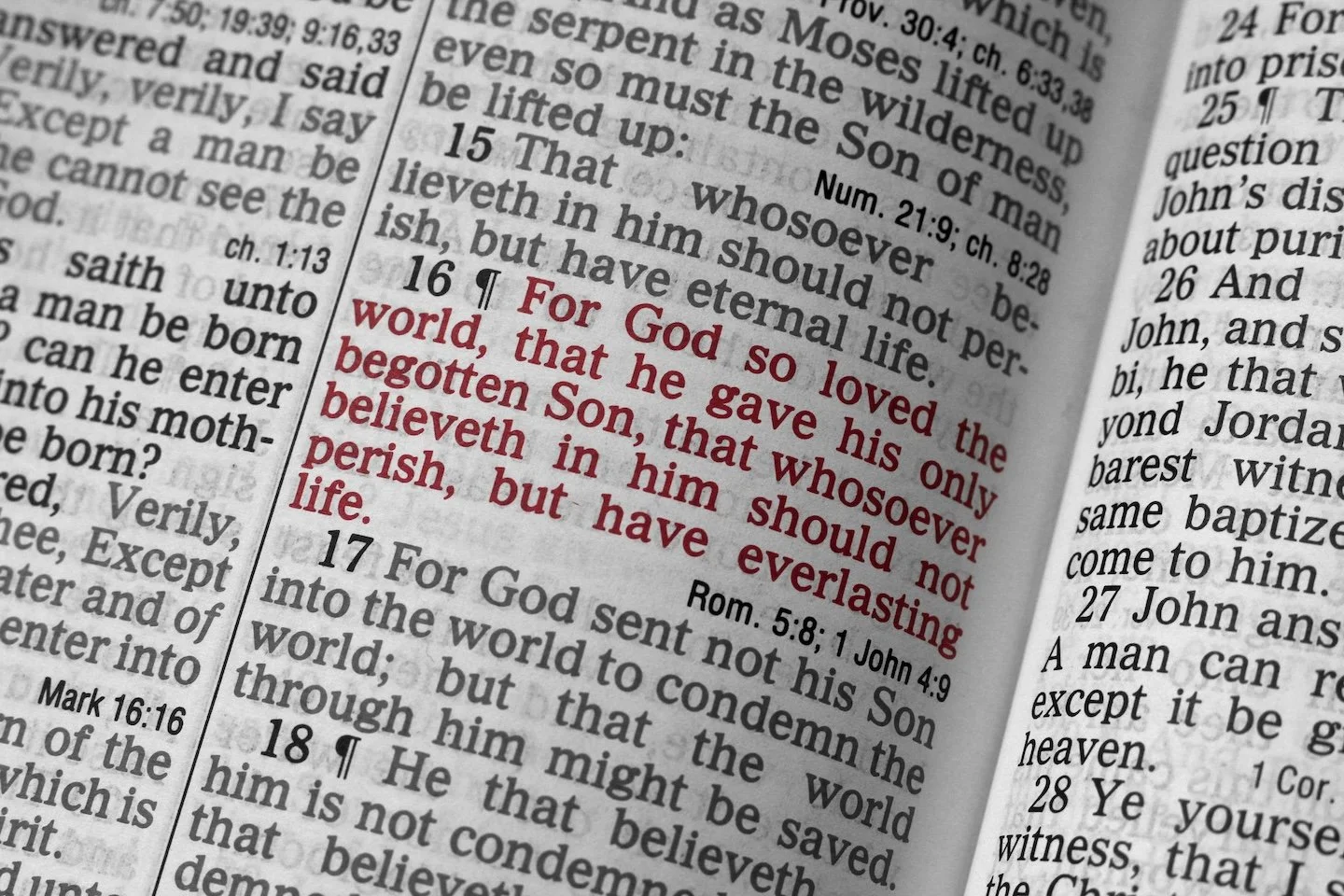
Pick up any Bible and open it. Immediately you are confronted with numbers. Big numbers. Little numbers. Chapter headings. Paragraph breaks. Quotation marks. Cross references. It is so normal to us that we do not even question it. We assume this is just what the Bible is.
But it was not written like that.
Every paragraph you see. Every sentence break. Every comma and quotation mark. Every chapter and verse number. All of that was added later. None of it appears in the earliest manuscripts. Translators had to decide where sentences end. They had to decide where paragraphs begin. They had to decide how to divide up thoughts. And those decisions shape how you read the text.
That can sound unsettling at first. It is not meant to be. It is just reality. And if we are going to take the Bible seriously, we should at least understand what it is we are holding in our hands.
I was introduced to the Bible in Sunday school. I remember the weekly memory verses. Memorize the reference. Memorize the exact wording. Recite it the next week. Maybe get a candy bar if you nailed it. I was terrible at that. I have never had a mind that works in chapter and verse. I think in story. I think in images. I think in movement.
Ask me about David and I can walk you through the arc. Saul’s insecurity. Samuel’s anointing. The tension with the Philistines. The long years of waiting before he becomes king. The failure with Bathsheba. The hope of a future Davidic king that shaped Israel’s imagination after exile. I can tell you the story and the theology that grows out of it. What I might not be able to do on the spot is tell you the exact chapter and verse those stories exist..
For years I felt like that meant I was less serious. Less committed. Less knowledgeable. Now, nearing fifty, I think it may have been a gift. I have met plenty of people who can quote chapter and verse but do not actually know the story those verses live inside. They can weaponize a line from a letter and never ask what the letter was addressing in the first place.
And that is where chapters and verses start to matter.
The New Testament was written in Koine Greek, the common language of the marketplace. Not the polished Greek of philosophers, but the everyday language of normal people. It was written on papyrus. That was expensive. Writing required skill. Not everyone could do it. Not everyone could read it. When Paul writes Romans, he does not even physically write it himself. At the end he says, “I, Tertius, who am writing this letter, greet you in the Lord.” That tells you something. These texts were communal productions. Paul is dictating. Someone is writing. Others are likely present.
Phoebe is commended in that same letter. She likely carried the letter to the churches in Rome. Think about that. A handful of house churches scattered across a massive city. No printing press. No mass copies. Most people illiterate. She reads it aloud. She performs it. The text is heard before it is privately studied. It is experienced as one flowing argument, not chopped into numbered fragments.
The earliest manuscripts reflect that. Continuous capital letters. No spaces. No punctuation. No paragraph breaks. No chapter headings. No verse numbers.
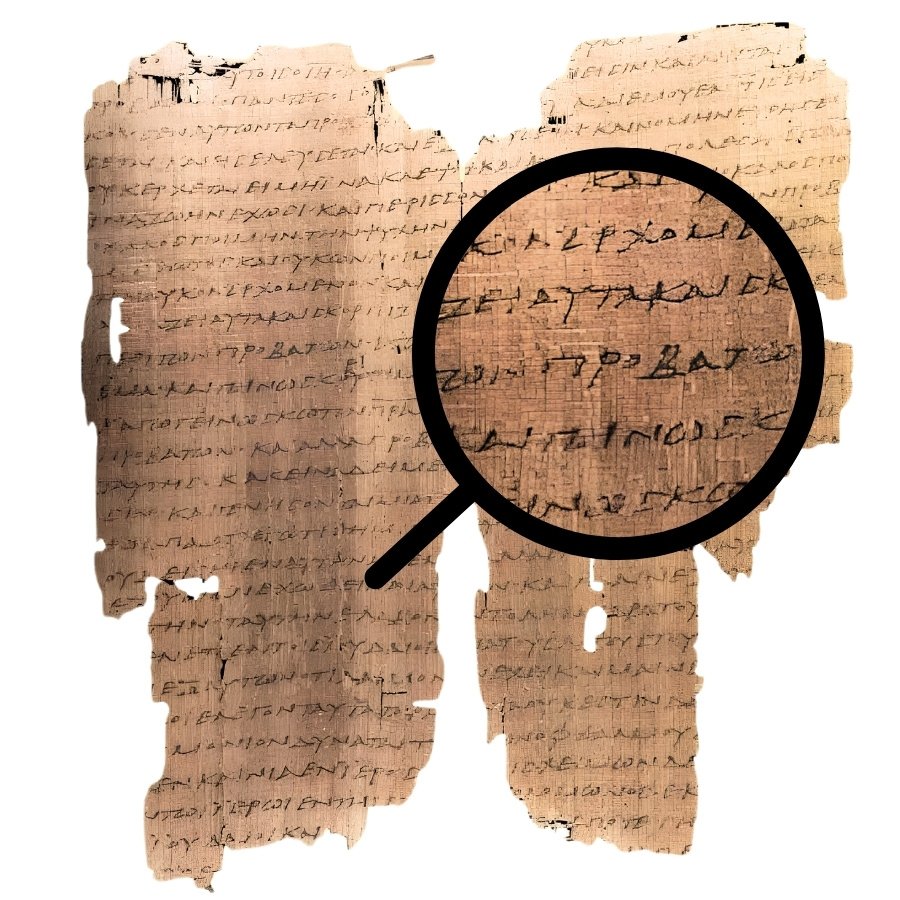
Papyrus 45. 180-220ce
This fragment from a codex containing the four Gospels and Acts, discovered in Egypt and dating to the 3rd century, shows that these texts were already being gathered into a single book and circulating as a unified collection much earlier than many assume.
Translators later had to decide where a sentence ended. Where a thought shifted. How to group ideas. Those are interpretive decisions. Sometimes they are obvious. Sometimes they are less so. But they are decisions.
And those decisions can shape theology.
Take 1 Corinthians 14:33-36. Older English Bibles insert a paragraph break before the verses that say women should remain silent in the churches. The break suggests a new thought. It feels like Paul is laying down a universal rule. That passage has been used, by some, for centuries to silence women. Read like this.
14:33 for God is not characterized by disorder but by peace. (End of previous thoughts.)
(New thought to address.) As in all the churches of the saints, (34) the women should be silent in the churches…
But what if the paragraph break is in the wrong place? What if the sentence about God being a God of peace, as in all the churches, belongs with what came before it? What if the lines about women being silent are actually a quotation from the Corinthians that Paul then pushes back on in the next verse when he says, “Did the word of God originate with you?” Paul quotes the Corinthians elsewhere in the letter and then responds to them. It is not a stretch to see that possibility here. What if, and some scholars do suggest this, that the passage should be read like this.
1 Corinthians 14:29 Let two or three people prophesy, and let the others evaluate what is said. 30 But if someone is prophesying and another person receives a revelation from the Lord, the one who is speaking must stop. 31 In this way, all who prophesy will have a turn to speak, one after the other, so that everyone will learn and be encouraged. 32 Remember that people who prophesy are in control of their spirit and can take turns. 33 For God is not a God of disorder but of peace, as in all the meetings of God’s holy people. (Paul finishing his thought above.)
(Paul moves on to quote something the Corinth community wrote him to address it.")
“34 Women should be silent during the church meetings. It is not proper for them to speak. They should be submissive, just as the law says. 35 If they have any questions, they should ask their husbands at home, for it is improper for women to speak in church meetings.”
(Paul then responds to the absurd statement above.)
36 Or do you think God’s word originated with you Corinthians? Are you the only ones to whom it was given? 37 If you claim to be a prophet or think you are spiritual, you should recognize that what I am saying is a command from the Lord himself. 38 But if you do not recognize this, you yourself will not be recognized.
Most modern translations fix this mistake and make a foot note addressing it. But the damage has already been done.
Here is my point.
Move a paragraph break and the tone shifts. Insert quotation marks and the argument changes. I am not saying that settles every debate. I am saying that editorial choices matter. They are not neutral.
Chapters were standardized in the thirteenth century. Verses were added in the sixteenth. For over a thousand years the church read Scripture without them. Augustine did not have verse numbers. The Cappadocian fathers did not preach from chapter divisions. They read long stretches. They traced themes. They listened to the narrative.
The numbers are a tool. They are helpful. I use them. We need them for reference. But the tool has trained us to read in fragments. We have built entire theological systems from isolated verses. We quote Philippians 4:13 as a promise of personal achievement. We post Jeremiah 29:11 on graduation cards without ever asking what exile meant for the people who first heard it.
Imagine reading three sentences from the middle of a novel and claiming you understand the plot. Imagine watching the last five minutes of a film and assuming you know the characters. That is often how we approach the Bible.
Scripture is not a database. It is a story. A long, unfolding, multi layered story about creation, rebellion, covenant, exile, restoration, and new creation. The law, the prophets, the letters, even apocalyptic visions all live within that larger arc. They serve the narrative. They do not float above it.
Narratives require patience. They ask you to sit in tension. They ask you to follow themes from Genesis through the prophets into the life of Jesus and beyond. Theology grows out of that soil. It does not exist apart from it.
So what if we have been navigating by numbers for so long that we have forgotten how to listen? What if our addiction to chapter and verse has quietly trained us to think in slogans instead of stories?
I am not saying throw away your Bible with numbers. I am saying hold them lightly. Remember that they are later additions. Resist the urge to build everything on a single isolated line. Read whole letters in one sitting. Immerse yourself in the narrative. Let the story shape your imagination.
If you have ever felt embarrassed because you cannot rattle off references on command, you may not be behind. You may actually be closer to how these texts were meant to be experienced. Know the story. Let it form you. And then, when you return to the numbers, use them as a guide, not as the foundation.
The Bible is not a collection of disconnected sayings. It is a unified, unfolding story. And when we learn to read it that way, we do not lose authority or depth. We gain wisdom.